
ER vs. Clinic Symptoms — Knowing Where to Go for Care
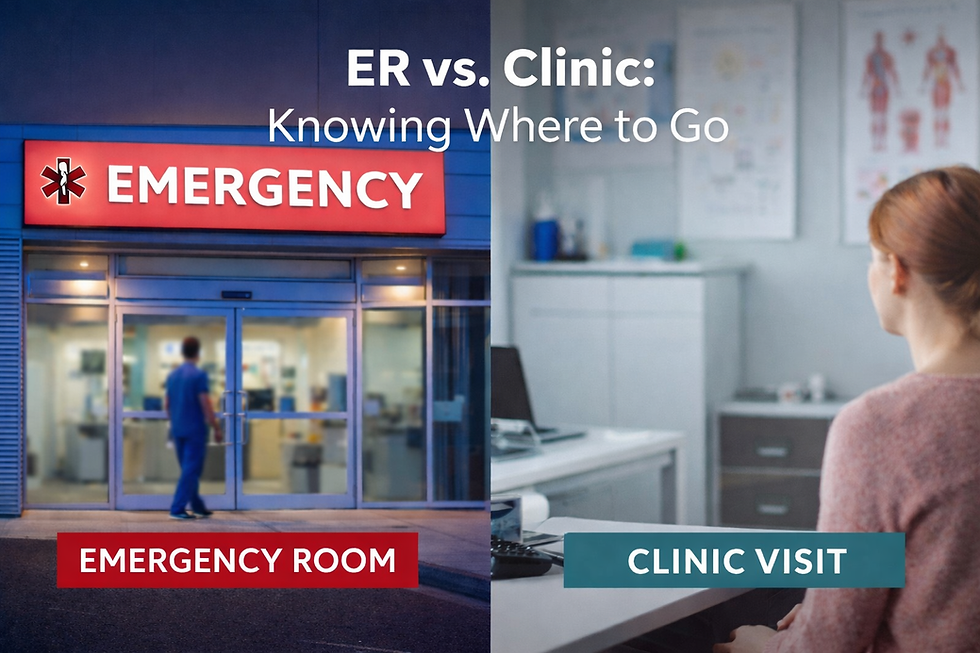
Knowing whether to go to the emergency room or schedule a clinic visit can be confusing, especially when symptoms feel concerning but unclear. Understanding which symptoms require immediate emergency care versus those that can be evaluated in a clinic setting can help you get the right care at the right time.
When to Go to the Emergency Room
The American Heart Association and Centers for Disease Control and Prevention (CDC) recommend seeking emergency care immediately for symptoms that may indicate a life-threatening condition.
Go to the ER or call 911 if you experience:
Sudden chest pain or pressure
Shortness of breath that is severe or comes on suddenly
Fainting or loss of consciousness
Sudden weakness, numbness, or trouble speaking
New or worsening chest discomfort accompanied by sweating, nausea, or dizziness
These symptoms may signal a heart attack, stroke, or other serious medical emergency where immediate treatment is critical.
Symptoms Often Appropriate for a Clinic Visit
Some symptoms may still need medical evaluation but do not always require emergency care. A clinic visit may be appropriate for:
Ongoing high blood pressure without severe symptoms
Palpitations that are mild or infrequent
Shortness of breath that is chronic and unchanged
Chest discomfort that is mild, brief, and not worsening
Fatigue or swelling that develops gradually
Your healthcare provider can evaluate these symptoms, run diagnostic tests, and determine next steps.
Why Timing Matters
The CDC emphasizes that delaying care for serious symptoms can lead to worse outcomes. If symptoms feel sudden, severe, or different from what you normally experience, emergency care is often the safest choice.
When in doubt, it is better to err on the side of caution and seek immediate evaluation.
How a Cardiology Clinic Supports Ongoing Care
Cardiology clinics play a vital role in prevention, diagnosis, and long-term management of heart conditions. Regular visits allow providers to:
Monitor heart health
Adjust medications
Evaluate ongoing symptoms
Identify concerns before they become emergencies
Understanding when to use the ER and when to visit a clinic helps ensure you receive timely and appropriate care.
Sources
American Heart Association. Heart Attack Warning Signs.
Centers for Disease Control and Prevention (CDC). Symptoms of Heart Disease.
Mayo Clinic. Chest Pain: First Aid and When to Seek Care.


Comments